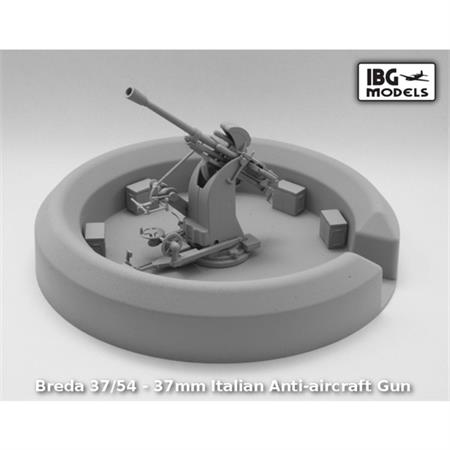


Breda 37/54 - 37mm Italian Anti-aircraft Gun
Item Number:
IBG35009
IBG35009
Manufacturer
IBG-Modellbau
IBG-Modellbau
Scale:
1:35
1:35
Please login here to see Prices.
3 Pieces available
Shipping 1 - 4 days
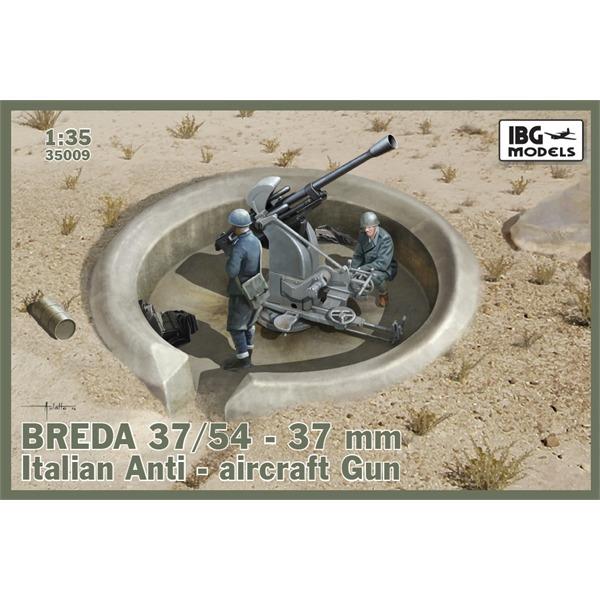
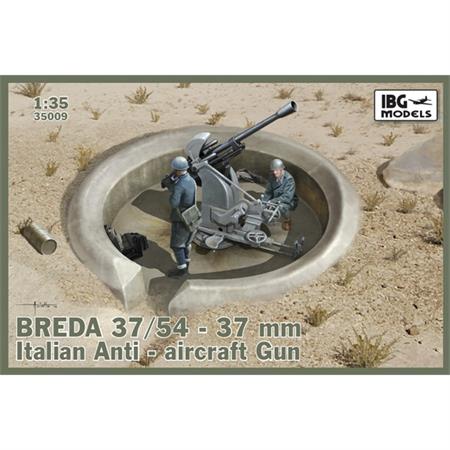
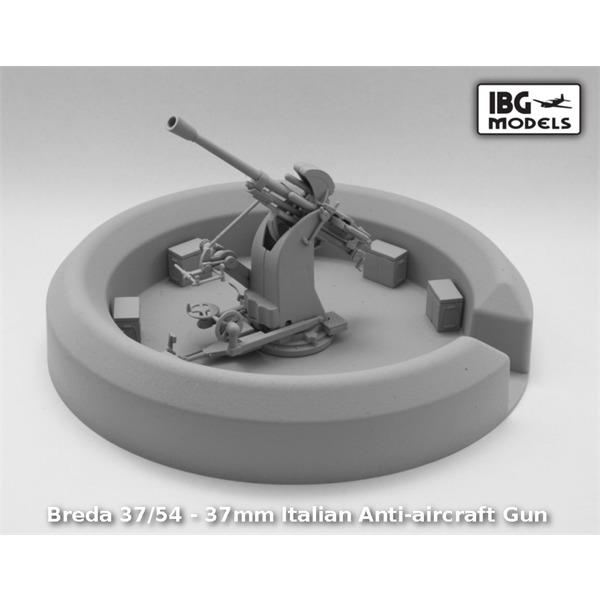
Plastic model kit for building an Italian Breda 37/54 Anti-Aircraft gun
The gun had a barrel length of 54 calibers, hence the designation "37/54". The weapon fired 37 mm high-explosive shells at a muzzle velocity of approximately 800 meters per second and achieved an effective engagement altitude of about 4,000 meters. Ammunition was fed via characteristic six-round stripper clips inserted from the top of the gun. Well-trained crews could achieve a high practical rate of fire by continuously feeding new stripper clips, although the actual rate of fire lagged behind that of modern automatic anti-aircraft guns from other nations.
In land-based operations, the Breda 37/54 was considered a capable medium-caliber anti-aircraft gun positioned between the light 20 mm guns and the heavy 75 mm or 90 mm anti-aircraft guns. The combination of its relatively high muzzle velocity, good range, and effective high-explosive ammunition was particularly dangerous against low- and medium-altitude fighter-bombers and reconnaissance aircraft. However, the weapon was comparatively heavy and less mobile than lighter anti-aircraft systems, which is why it was usually deployed in prepared positions.
One advantage of the Breda 37/54 was its robust construction and reliable ammunition. The projectiles were significantly more effective than the widely used 20 mm anti-aircraft guns and could severely damage or shoot down aircraft with just a few hits. At the same time, the weapon was simpler and less expensive to deploy than heavier, larger-caliber anti-aircraft guns.
Disadvantages included its comparatively low practical rate of fire and the short interruptions in firing caused by the stripper feed. Furthermore, the weapon was technically less advanced than contemporary systems such as the German 3.7 cm Flak 36, the Swedish Bofors 40 mm L/60, or the Soviet 37 mm anti-aircraft gun M1939 (61-K). The Swedish Bofors, in particular, was considered superior in terms of rate of fire, ease of operation, and international distribution.
After the Italian armistice in 1943, numerous Breda 37/54 guns fell into German hands. The Wehrmacht and Luftwaffe primarily used captured examples in Italy and the Balkans for airfield and installation defense. Due to increasing Allied air pressure, many of these guns continued to be used in stationary anti-aircraft positions until the end of the war.
- 1:35 scale
- with metal barrel
- field mount and ammunition boxes included
- without figures
- unbuilt, unpainted
- paint and glue not included
The gun had a barrel length of 54 calibers, hence the designation "37/54". The weapon fired 37 mm high-explosive shells at a muzzle velocity of approximately 800 meters per second and achieved an effective engagement altitude of about 4,000 meters. Ammunition was fed via characteristic six-round stripper clips inserted from the top of the gun. Well-trained crews could achieve a high practical rate of fire by continuously feeding new stripper clips, although the actual rate of fire lagged behind that of modern automatic anti-aircraft guns from other nations.
In land-based operations, the Breda 37/54 was considered a capable medium-caliber anti-aircraft gun positioned between the light 20 mm guns and the heavy 75 mm or 90 mm anti-aircraft guns. The combination of its relatively high muzzle velocity, good range, and effective high-explosive ammunition was particularly dangerous against low- and medium-altitude fighter-bombers and reconnaissance aircraft. However, the weapon was comparatively heavy and less mobile than lighter anti-aircraft systems, which is why it was usually deployed in prepared positions.
One advantage of the Breda 37/54 was its robust construction and reliable ammunition. The projectiles were significantly more effective than the widely used 20 mm anti-aircraft guns and could severely damage or shoot down aircraft with just a few hits. At the same time, the weapon was simpler and less expensive to deploy than heavier, larger-caliber anti-aircraft guns.
Disadvantages included its comparatively low practical rate of fire and the short interruptions in firing caused by the stripper feed. Furthermore, the weapon was technically less advanced than contemporary systems such as the German 3.7 cm Flak 36, the Swedish Bofors 40 mm L/60, or the Soviet 37 mm anti-aircraft gun M1939 (61-K). The Swedish Bofors, in particular, was considered superior in terms of rate of fire, ease of operation, and international distribution.
After the Italian armistice in 1943, numerous Breda 37/54 guns fell into German hands. The Wehrmacht and Luftwaffe primarily used captured examples in Italy and the Balkans for airfield and installation defense. Due to increasing Allied air pressure, many of these guns continued to be used in stationary anti-aircraft positions until the end of the war.
Customer Reviews 0
Schreiben Sie jetzt Ihre persönliche Erfahrung mit diesem Artikel und helfen Sie anderen bei deren Kaufentscheidung