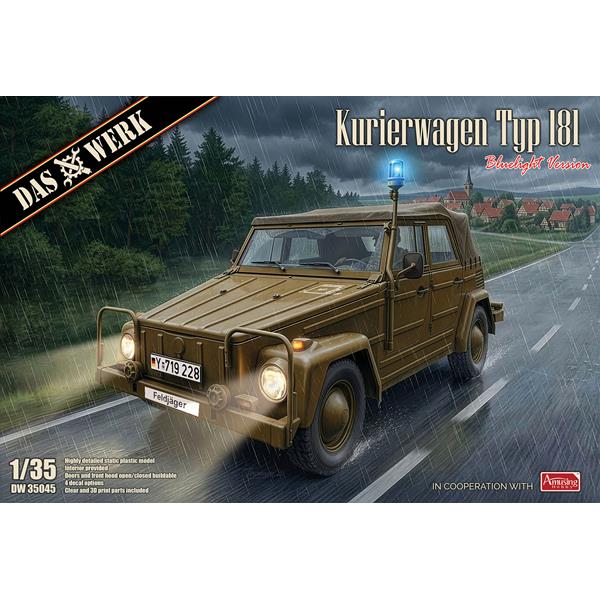
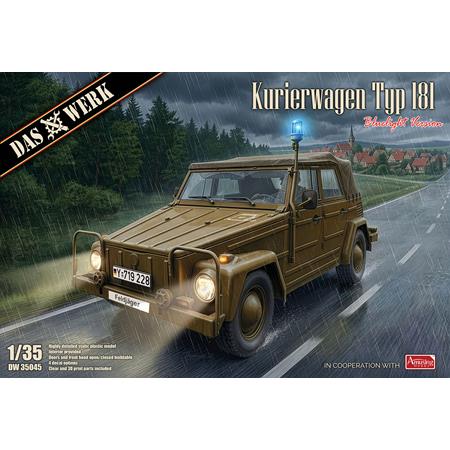


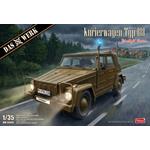
Kurierwagen Typ 181 - Bluelight Version
Item Number:
DW35045
DW35045
Manufacturer
DAS WERK
DAS WERK
Scale:
1:35
1:35
Please login here to see Prices.
More than 5 Pieces available
Shipping 1 - 4 days
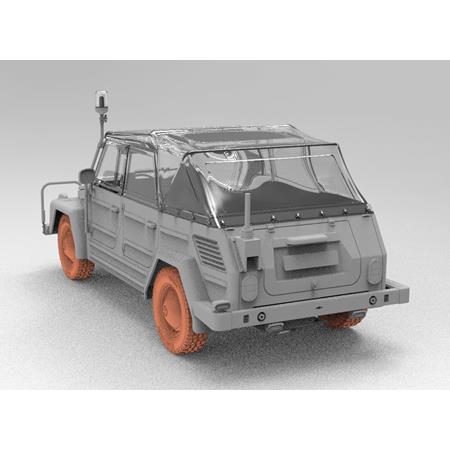
The Type 181—officially designated by the Bundeswehr as the "Pkw 0.4 t tmil 4×2" (partially militarized, rear-wheel drive)—was procured starting in 1969 as a robust, low-cost "stopgap" vehicle for courier, liaison, and driver training duties.
The unarmed base model was a prime example of minimalism: it accommodated four soldiers and dispensed entirely with carpeting or interior trim. The interior, featuring bare sheet metal and olive-green synthetic leather seats, was equipped with floor drain holes, allowing the vehicle to be easily hosed down after use. Maximum openness was achieved through a fully collapsible fabric top, a windshield that folded forward, and four doors that could be removed without tools.
Technically, the Type 181 was based on a modified Karmann Ghia chassis and proven Beetle components. Powering the rear was an air-cooled, four-cylinder boxer engine (initially producing 44 hp with a 1.5-liter displacement; from 1973, 48 hp with 1.6 liters). Despite lacking all-wheel drive, the vehicle achieved impressive off-road capability thanks to the engine's weight resting on the drive axle and a standard differential lock. Maintenance offered a major logistical advantage: because the vehicle utilized mass-produced civilian technology, repairs could be handled simply and affordably through the standard dealer network. In total, the Bundeswehr procured over 15,000 of these rugged courier vehicles, many of which remained in service well into the 1990s. For more specialized tasks, the Bundeswehr specifically upgraded the Type 181—either at the factory or via field modification kits—particularly for use as radio and command vehicles and for the *Feldjäger* (military police).
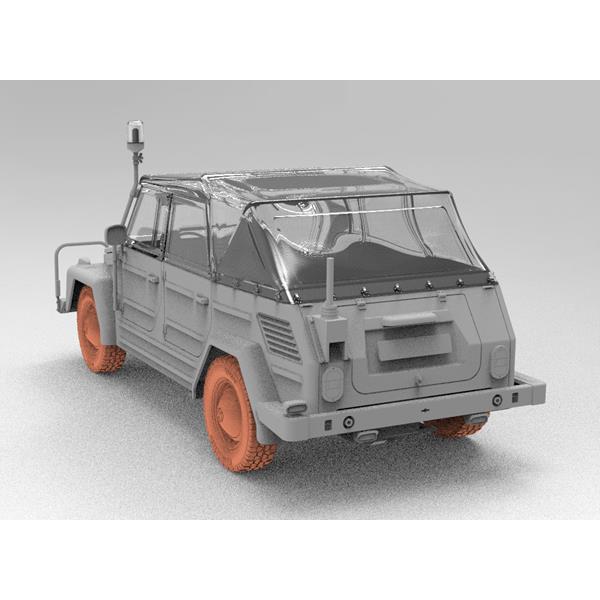
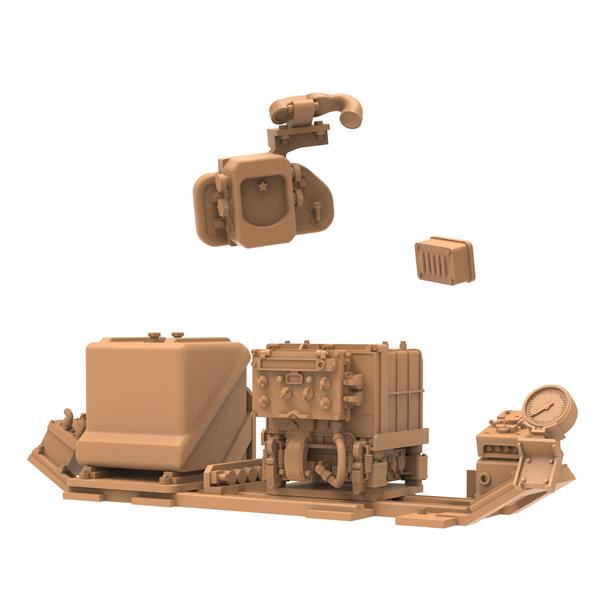
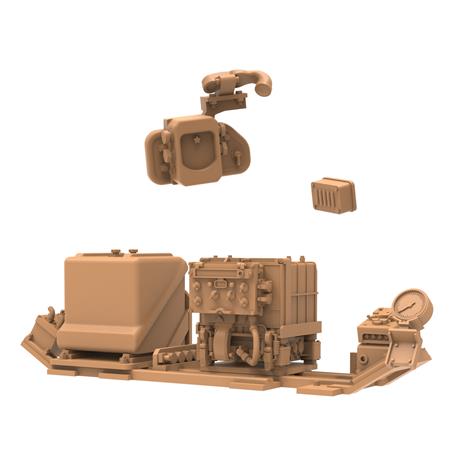
The radio versions (often referred to as *Funk-Kübel*) differed significantly from the standard model in both appearance and technical specifications. The standard civilian 12-volt electrical system was insufficient to reliably power the energy-intensive radio equipment (such as the SEM 25/35). Consequently, these vehicles were fitted with a military-grade 24-volt system featuring a higher-output alternator and a second battery. The radio gear was mounted on a special equipment rack—replacing the rear bench seat or occupying the luggage compartment—thereby reducing the Type 181’s seating capacity to three or two people. A distinctive visual feature was the prominent, often very long whip antennas attached to robust mounts (usually on the rear left and/or right bodywork).
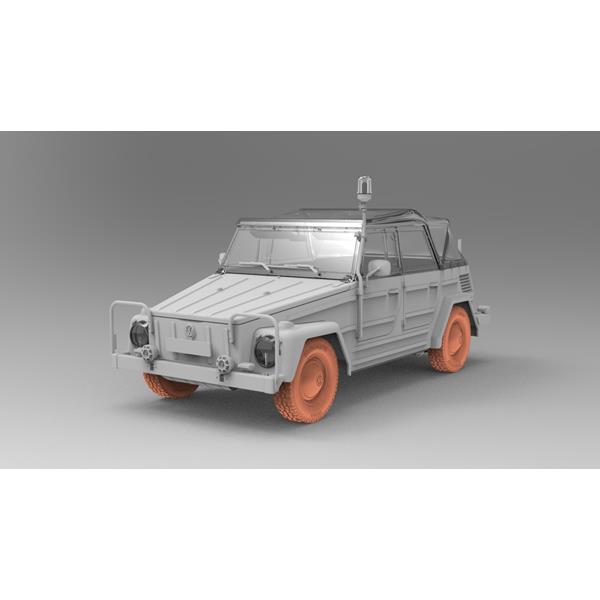
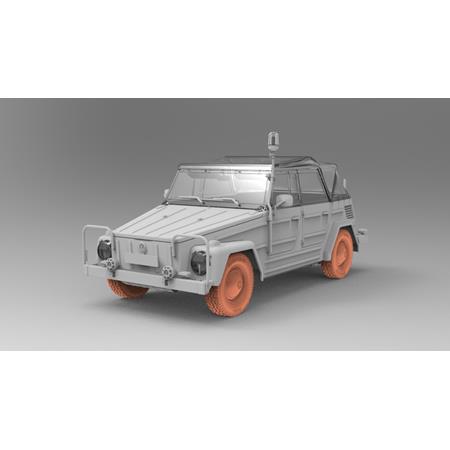
Versions equipped with emergency warning systems (blue flashing lights) were deployed by the *Feldjäger*, as well as by medical service units and garrison headquarters. On the typically olive-green *Feldjäger* vehicles, the blue rotating beacon was usually mounted on a pole on the left side near the windshield, ensuring visibility even when the soft top was open. This setup was complemented by two high-output sirens (*Martinshorn*) located in the front bumper area. These vehicles often combined the best of both worlds: they were equipped with a 24-volt radio system for operational coordination as well as the visual and audible emergency signals required to exercise special traffic privileges.
Plastic model kit
unbuilt / unpainted
Paint and glue not included
Unfortunately, a printing error has crept into the current instructions—you can download the correct page for assembly steps 1 and 2 here: Correction page.
The unarmed base model was a prime example of minimalism: it accommodated four soldiers and dispensed entirely with carpeting or interior trim. The interior, featuring bare sheet metal and olive-green synthetic leather seats, was equipped with floor drain holes, allowing the vehicle to be easily hosed down after use. Maximum openness was achieved through a fully collapsible fabric top, a windshield that folded forward, and four doors that could be removed without tools.
Technically, the Type 181 was based on a modified Karmann Ghia chassis and proven Beetle components. Powering the rear was an air-cooled, four-cylinder boxer engine (initially producing 44 hp with a 1.5-liter displacement; from 1973, 48 hp with 1.6 liters). Despite lacking all-wheel drive, the vehicle achieved impressive off-road capability thanks to the engine's weight resting on the drive axle and a standard differential lock. Maintenance offered a major logistical advantage: because the vehicle utilized mass-produced civilian technology, repairs could be handled simply and affordably through the standard dealer network. In total, the Bundeswehr procured over 15,000 of these rugged courier vehicles, many of which remained in service well into the 1990s. For more specialized tasks, the Bundeswehr specifically upgraded the Type 181—either at the factory or via field modification kits—particularly for use as radio and command vehicles and for the *Feldjäger* (military police).
The radio versions (often referred to as *Funk-Kübel*) differed significantly from the standard model in both appearance and technical specifications. The standard civilian 12-volt electrical system was insufficient to reliably power the energy-intensive radio equipment (such as the SEM 25/35). Consequently, these vehicles were fitted with a military-grade 24-volt system featuring a higher-output alternator and a second battery. The radio gear was mounted on a special equipment rack—replacing the rear bench seat or occupying the luggage compartment—thereby reducing the Type 181’s seating capacity to three or two people. A distinctive visual feature was the prominent, often very long whip antennas attached to robust mounts (usually on the rear left and/or right bodywork).
Versions equipped with emergency warning systems (blue flashing lights) were deployed by the *Feldjäger*, as well as by medical service units and garrison headquarters. On the typically olive-green *Feldjäger* vehicles, the blue rotating beacon was usually mounted on a pole on the left side near the windshield, ensuring visibility even when the soft top was open. This setup was complemented by two high-output sirens (*Martinshorn*) located in the front bumper area. These vehicles often combined the best of both worlds: they were equipped with a 24-volt radio system for operational coordination as well as the visual and audible emergency signals required to exercise special traffic privileges.
Plastic model kit
- Highly detailed kit
- 3D-printed wheels and radio unit (including handset) for superior detail
- Closed tarpaulin molded as a single part in clear material
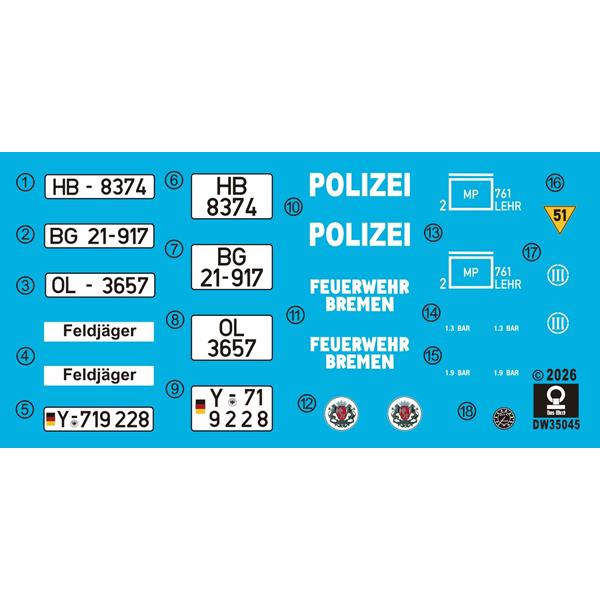
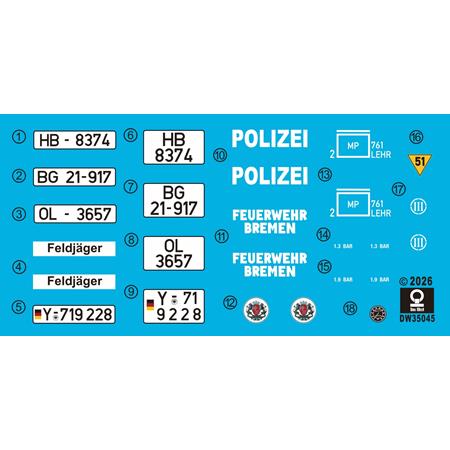
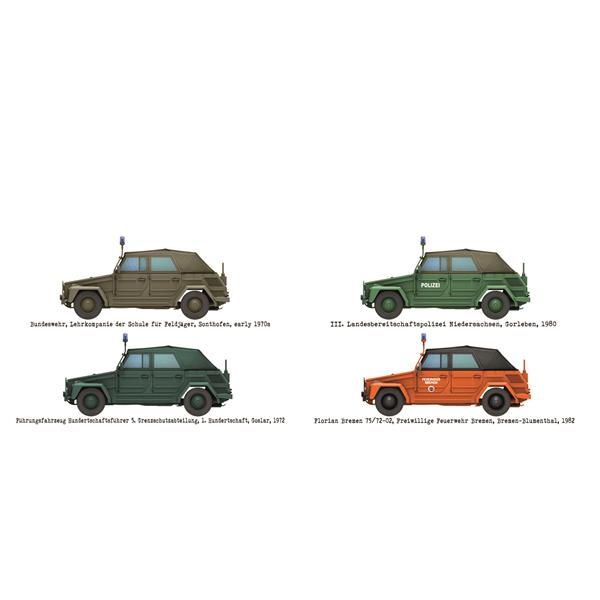
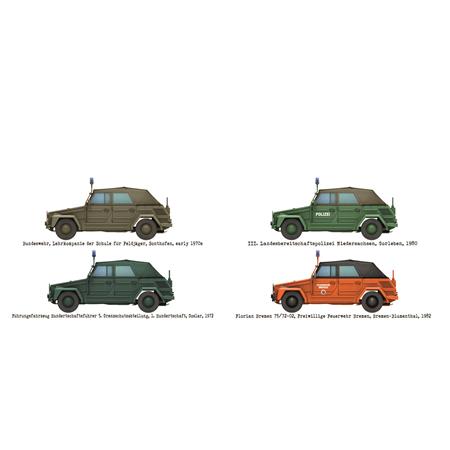
- Finely printed decal sheet offering 4 different marking options
- Fully detailed troop compartment interior
- Engine hood can be assembled in the open or closed position
- Pre-cut masking foils for the clear parts
unbuilt / unpainted
Paint and glue not included
Unfortunately, a printing error has crept into the current instructions—you can download the correct page for assembly steps 1 and 2 here: Correction page.
Customer Reviews 0
Schreiben Sie jetzt Ihre persönliche Erfahrung mit diesem Artikel und helfen Sie anderen bei deren Kaufentscheidung