




DW35034 LARC V early (Bundeswehr, et al)
Item Number:
DW35034
DW35034
Manufacturer
DAS WERK
DAS WERK
Scale:
1:35
1:35
Please login here to see Prices.
More than 5 Pieces available
Shipping 1 - 4 days
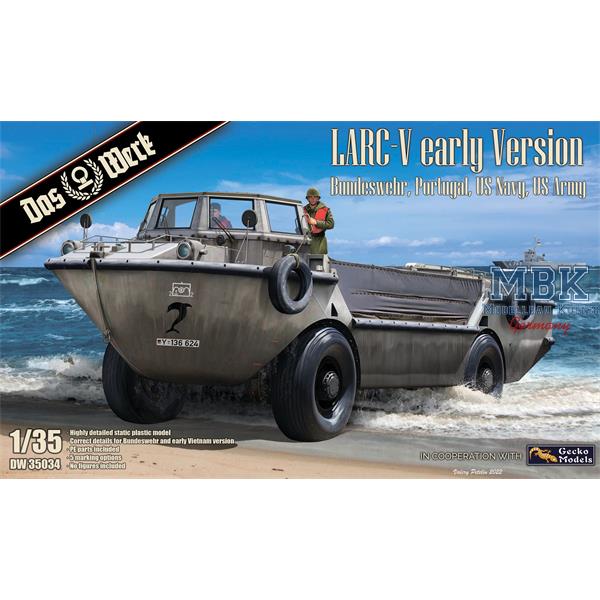
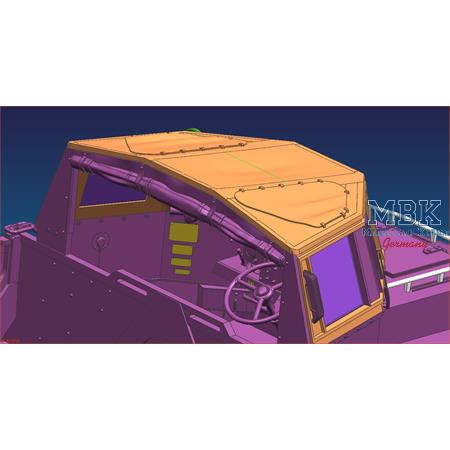
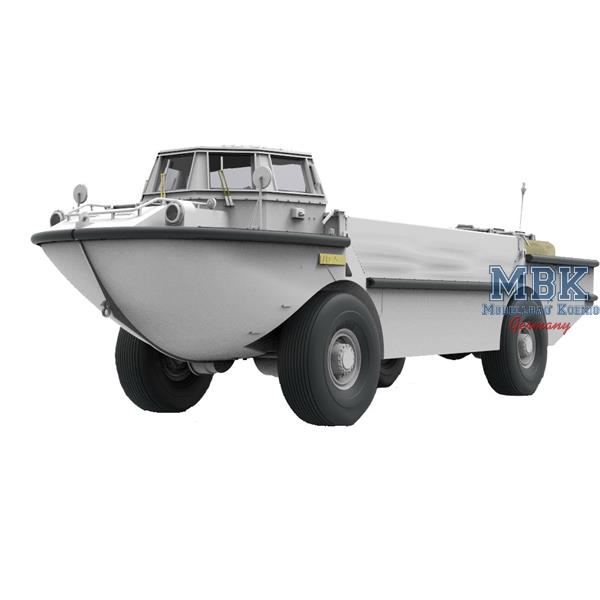
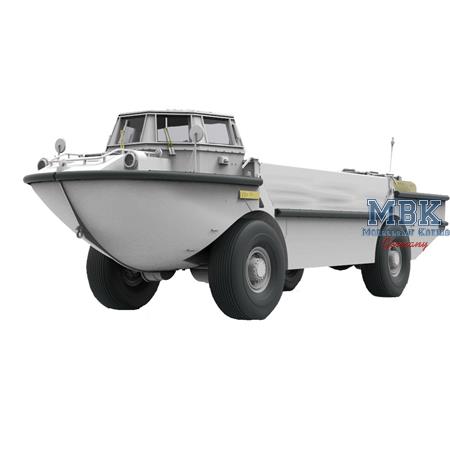
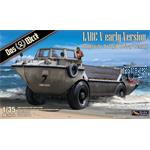
Plastic model kit of a LARC-V featuring specific modifications for the Bundeswehr
The German Navy procured not only the LARC-V but the entire LARC family of vehicles. A total of 247 vehicles were acquired, comprising 192 LARC-Vs, 47 LARC-XVs, and 8 LARC-LXs (BARCs). Sourced from US stocks, the vehicles were primarily deployed with amphibious transport and handling battalions - most notably Amphibious Transport and Handling Battalion 2 in Emden. While the fleet was gradually reduced starting in the mid-1970s, some vehicles remained in service for several years or were placed in storage.
In terms of technical specifications, the German LARC-Vs initially differed little from their American counterparts. They featured a welded aluminum hull, a 300 hp Cummins V8 diesel engine, all-wheel drive, and twin propellers for waterborne operations. With a payload capacity of approximately 4.5 tonnes, they could transport light vehicles, pallets, ammunition, or supplies directly from landing ships to the beach. This capability was particularly significant for NATO amphibious exercises, as it eliminated the need for port facilities.
Visually, the vehicles were distinguished by their "Y" license plates and German Navy markings. Most LARC-Vs retained their original American configuration, receiving only modifications required to meet German lighting and marking regulations, as well as standard Bundeswehr equipment. Unlike many US Navy vehicles that underwent modernization later on, the German vehicles did not undergo any major technical modifications.
The LARC-Vs were regularly deployed during national and international exercises involving the Amphibious Group. They transported material from landing craft to the beach, supported the establishment of supply points, and moved supplies across challenging terrain. Their ability to transition between water and land without the need for transshipment bridged the gap between landing craft and trucks, making them a vital component of the German Navy's amphibious logistics.
For scale modelers, a German Navy LARC-V offers several distinctive features. Typical features include the bronze-green paintwork (the RAL 6031 used by the Bundeswehr at the time did not yet correspond to the later *Flecktarn* system; different shades of Bundeswehr green were used in the 1960s and 1970s), "Y" registration plates, tactical markings of the amphibious transport and handling units, and - frequently - only minor differences compared to American vehicles. Models of vehicles from the Amphibious Transport and Handling Battalion 2 in Emden - such as those depicted in the *Das Werk* kit DW35034 - are of particular interest. This variant documents a little-known yet important chapter in the history of the Bundesmarine's Amphibious Group.
- 1:35 scale
- Can be built as a Bundeswehr vehicle or an early US Vietnam War version
- Includes optional parts and accessories
- Includes 3D-printed parts
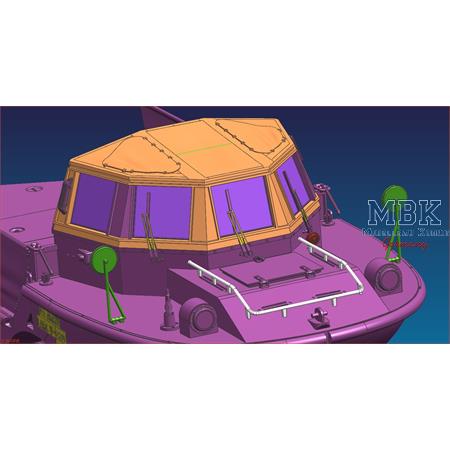
- Includes clear parts and photo-etched parts
- Features accurate new parts for the Bundeswehr version
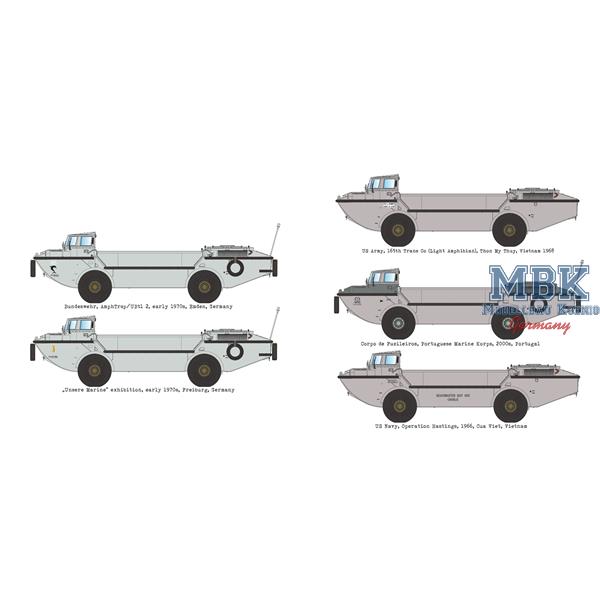
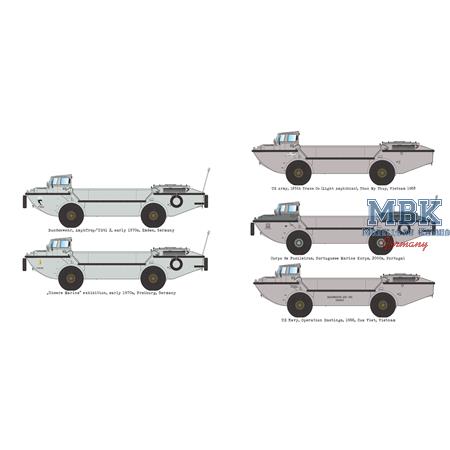
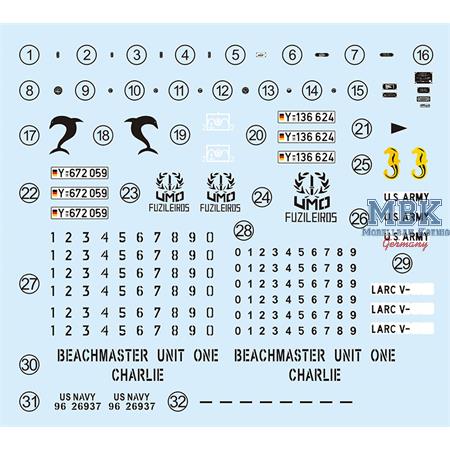
- 5 different marking options:
- Y-672 059: "Unsere Marine" exhibition, Freiburg/Germany, early 1970s
- Y-136 624: Bundeswehr, AmphTrsp/UBtl 2, Emden/Germany, early 1970s
- 96 26937: Beachmaster Unit One Charlie, US Navy, Operation Hastings, Cua Viet/Vietnam, 1966
- LARC V-495: 165th Trans Co. (Light Amphibian), US Army, Thon My Thuy/Vietnam, 1968
- 414: Corpo de Fuzileiros (Portuguese Marine Corps), Portugal, 2000s
- Unassembled, unpainted
- Paint and glue not included
The German Navy procured not only the LARC-V but the entire LARC family of vehicles. A total of 247 vehicles were acquired, comprising 192 LARC-Vs, 47 LARC-XVs, and 8 LARC-LXs (BARCs). Sourced from US stocks, the vehicles were primarily deployed with amphibious transport and handling battalions - most notably Amphibious Transport and Handling Battalion 2 in Emden. While the fleet was gradually reduced starting in the mid-1970s, some vehicles remained in service for several years or were placed in storage.
In terms of technical specifications, the German LARC-Vs initially differed little from their American counterparts. They featured a welded aluminum hull, a 300 hp Cummins V8 diesel engine, all-wheel drive, and twin propellers for waterborne operations. With a payload capacity of approximately 4.5 tonnes, they could transport light vehicles, pallets, ammunition, or supplies directly from landing ships to the beach. This capability was particularly significant for NATO amphibious exercises, as it eliminated the need for port facilities.
Visually, the vehicles were distinguished by their "Y" license plates and German Navy markings. Most LARC-Vs retained their original American configuration, receiving only modifications required to meet German lighting and marking regulations, as well as standard Bundeswehr equipment. Unlike many US Navy vehicles that underwent modernization later on, the German vehicles did not undergo any major technical modifications.
The LARC-Vs were regularly deployed during national and international exercises involving the Amphibious Group. They transported material from landing craft to the beach, supported the establishment of supply points, and moved supplies across challenging terrain. Their ability to transition between water and land without the need for transshipment bridged the gap between landing craft and trucks, making them a vital component of the German Navy's amphibious logistics.
For scale modelers, a German Navy LARC-V offers several distinctive features. Typical features include the bronze-green paintwork (the RAL 6031 used by the Bundeswehr at the time did not yet correspond to the later *Flecktarn* system; different shades of Bundeswehr green were used in the 1960s and 1970s), "Y" registration plates, tactical markings of the amphibious transport and handling units, and - frequently - only minor differences compared to American vehicles. Models of vehicles from the Amphibious Transport and Handling Battalion 2 in Emden - such as those depicted in the *Das Werk* kit DW35034 - are of particular interest. This variant documents a little-known yet important chapter in the history of the Bundesmarine's Amphibious Group.
Customer Reviews 0
Schreiben Sie jetzt Ihre persönliche Erfahrung mit diesem Artikel und helfen Sie anderen bei deren Kaufentscheidung