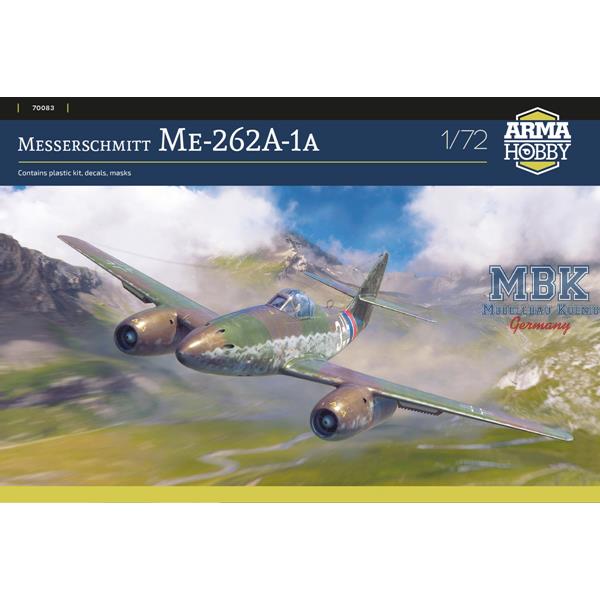
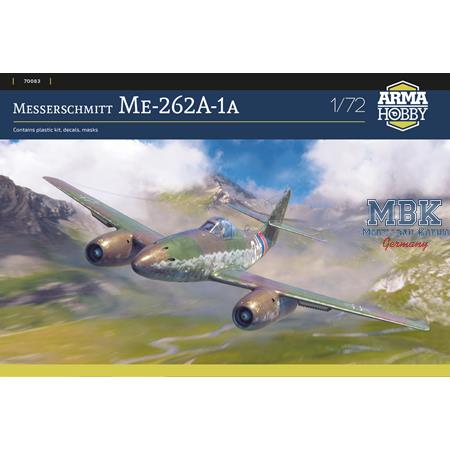


Messerschmitt Me-262 A-1a
Item Number:
ARMA70083
ARMA70083
Manufacturer
ARMA HOBBY
ARMA HOBBY
Scale:
1:72
1:72
Please login here to see Prices.
Appears soon
We expect to arrive at middle / end of February 2026
Expected to appear middle / end of February 2026
Plastic model kit for a Messerschmitt Me 262 A-1a "Schwalbe"
The Messerschmitt Me 262 was an aircraft ahead of its time. As the world’s first mass-produced jet fighter to enter combat service, it heralded the arrival of a completely new era in military aviation. Its story began even before the outbreak of the Second World War, when German engineers set out to create an aircraft capable of surpassing the limitations of piston-engine propulsion.
Jet fighter aeroplane is born
The path of the Me 262 to front-line service was long and difficult. Technical challenges associated with the development of jet engines, continuous design changes, and organisational decisions delayed its combat debut until late 1944. By the time the aircraft reached operational units, the situation of the Third Reich had already become desperate, and Allied air superiority was overwhelming.
In its fighter version, the A-1a, the Me 262 was conceived primarily as an interceptor designed to destroy Allied bomber formations. Its greatest advantage was speed, far exceeding the performance of contemporary piston-engined fighters. Combined with heavy armament—four 30 mm MK 108 cannons—it gave the pilot the ability to deliver devastating attacks against heavy bombers in a short time and disengage before escorting fighters could react.
Me-262 Operational service
In combat, the Me 262 confirmed its remarkable potential. At the same time, it quickly became clear that even such an advanced aircraft could not, on its own, reverse the course of the war. The limited number of aircraft produced, chronic fuel shortages, short engine service life, and effective Allied attacks on airfields and technical infrastructure severely restricted its operational use.
After the war, the Me 262 did not disappear from the pages of history. Captured aircraft became the subject of intensive study at Allied research centres, while in Czechoslovakia a short production run was launched using preserved documentation and components. These aircraft, known as the Avia S-92 and CS-92, remained in service until 1950, primarily in air defence roles.
Icon of aerospace development
Today, the Messerschmitt Me 262 A-1a remains one of the most recognisable aircraft of the Second World War. It stands as a symbol of a technological leap that came too late to change the outcome of the conflict, yet early enough to permanently shape the future of fighter aviation for decades to come.
Text ARMA Hobby
- Scale 1:72
- Unbuilt, unpainted
- Paint and glue not included
- Two gray injection-molded sprues
- One clear injection-molded sprue containing:
- Cockpit canopy parts
- Arma Jig assembly aid for correct alignment of parts
- Metal nose weight for proper balance of the finished model
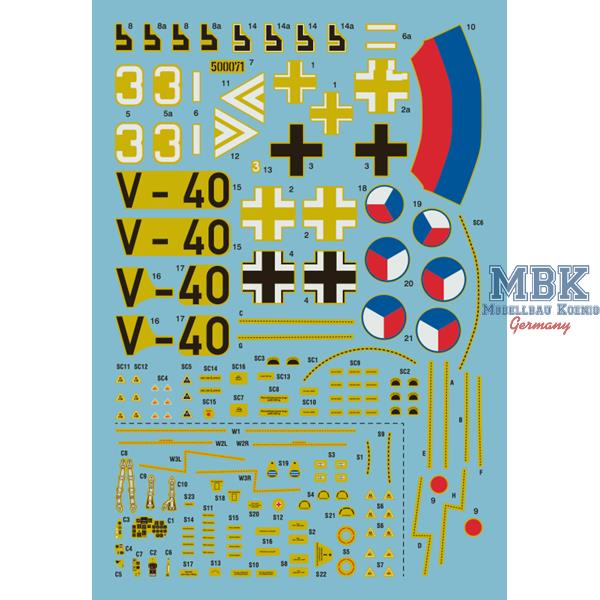
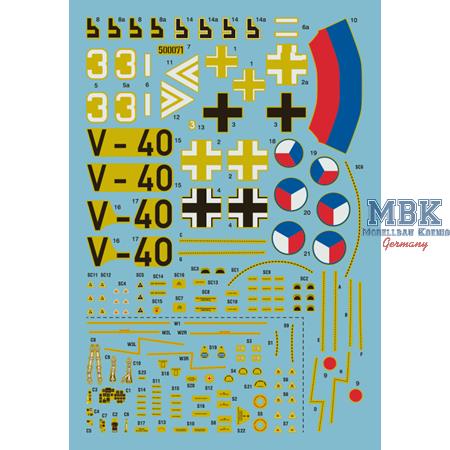
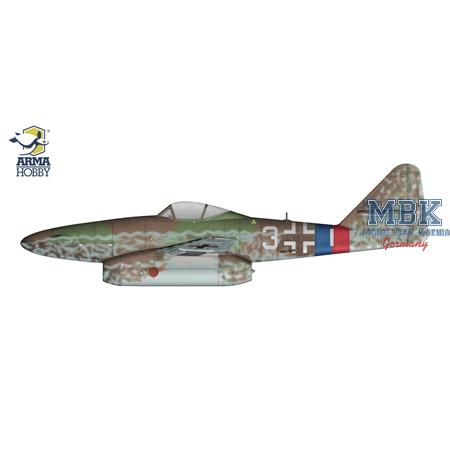
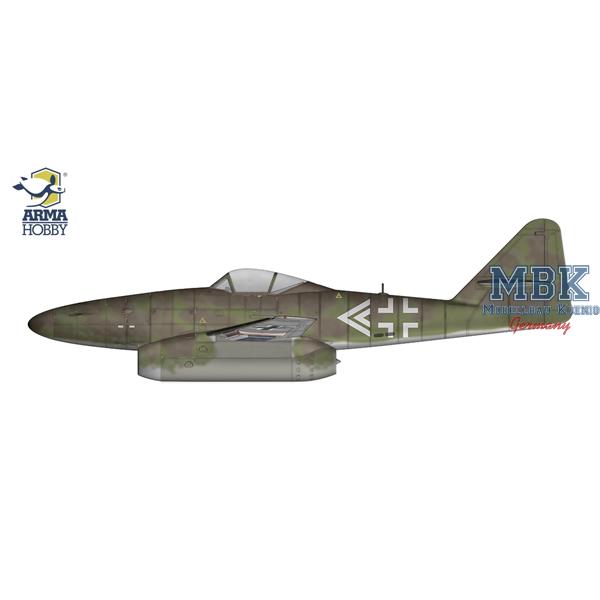
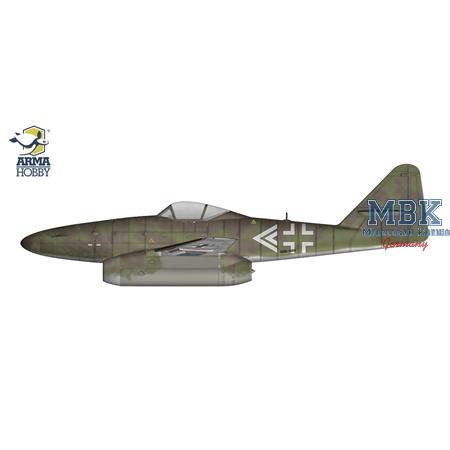
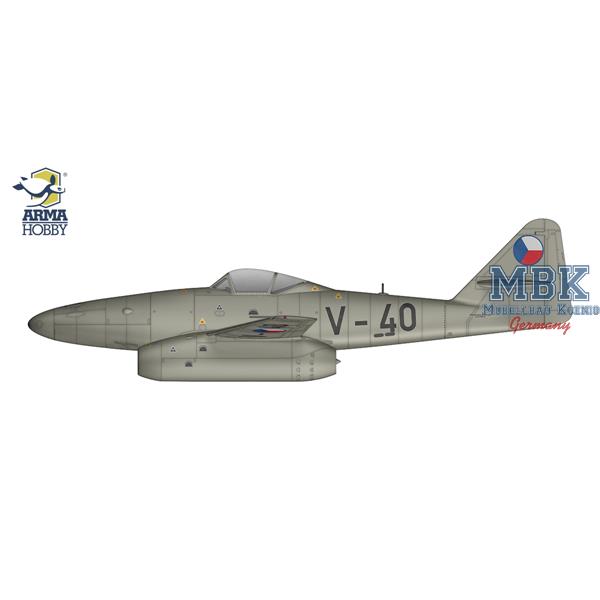
- Decal sheet with three marking options:
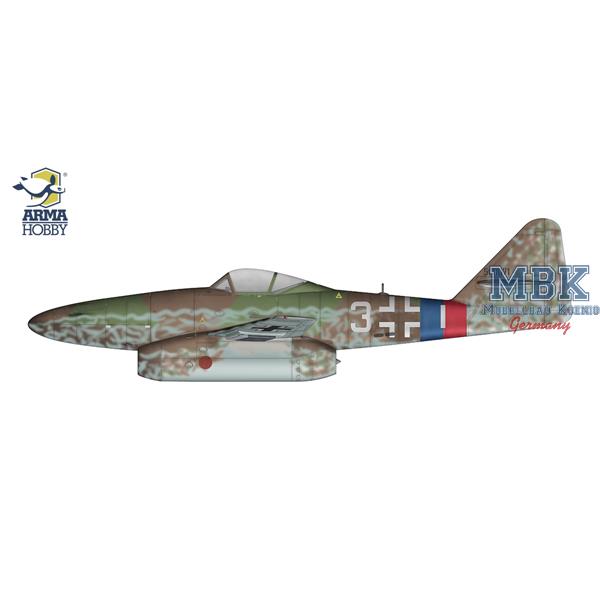
- Wartime paint scheme: Messerschmitt Me 262 A-1a, W.Nr. 500071 "White 3", Senior Ensign (Officer Candidate) Hans Guido Mutke, 9./JG 7, Munich-Riem / Fürstenfeldbruck Airfields, Germany, April 1945
- Wartime paint scheme: Messerschmitt Me 262 A-1a, Jagdverband 44, Lieutenant General (Lieutenant General) Adolf Galland, Unit Commander, Munich-Riem Airfield, Germany, February–April 1945
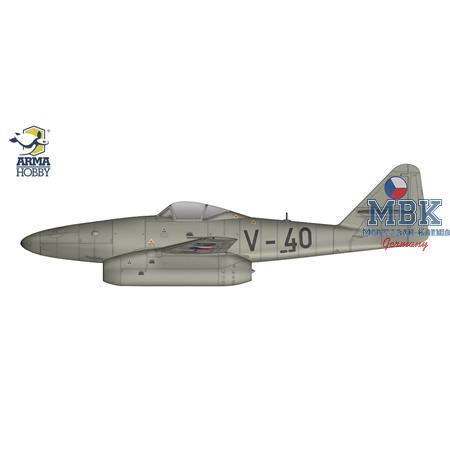
- Post-war paint scheme: Avia S-92 "Turbina", V-40, Czechoslovak Air Force, 5th Fighter Flight (5. stíhací letka), Žatec Airfield, 1947–1950
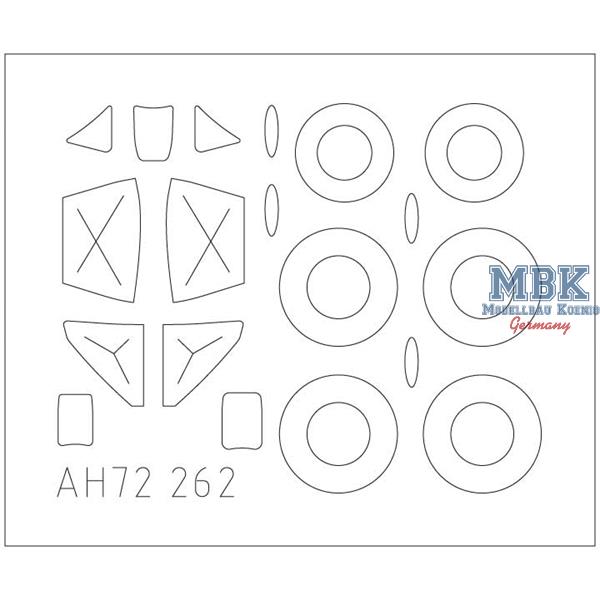
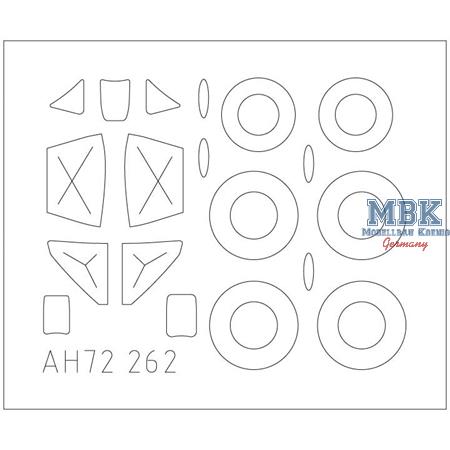
- Masking templates for the cockpit canopy
- Code to download a file for 3D printing accessories
The Messerschmitt Me 262 was an aircraft ahead of its time. As the world’s first mass-produced jet fighter to enter combat service, it heralded the arrival of a completely new era in military aviation. Its story began even before the outbreak of the Second World War, when German engineers set out to create an aircraft capable of surpassing the limitations of piston-engine propulsion.
Jet fighter aeroplane is born
The path of the Me 262 to front-line service was long and difficult. Technical challenges associated with the development of jet engines, continuous design changes, and organisational decisions delayed its combat debut until late 1944. By the time the aircraft reached operational units, the situation of the Third Reich had already become desperate, and Allied air superiority was overwhelming.
In its fighter version, the A-1a, the Me 262 was conceived primarily as an interceptor designed to destroy Allied bomber formations. Its greatest advantage was speed, far exceeding the performance of contemporary piston-engined fighters. Combined with heavy armament—four 30 mm MK 108 cannons—it gave the pilot the ability to deliver devastating attacks against heavy bombers in a short time and disengage before escorting fighters could react.
Me-262 Operational service
In combat, the Me 262 confirmed its remarkable potential. At the same time, it quickly became clear that even such an advanced aircraft could not, on its own, reverse the course of the war. The limited number of aircraft produced, chronic fuel shortages, short engine service life, and effective Allied attacks on airfields and technical infrastructure severely restricted its operational use.
After the war, the Me 262 did not disappear from the pages of history. Captured aircraft became the subject of intensive study at Allied research centres, while in Czechoslovakia a short production run was launched using preserved documentation and components. These aircraft, known as the Avia S-92 and CS-92, remained in service until 1950, primarily in air defence roles.
Icon of aerospace development
Today, the Messerschmitt Me 262 A-1a remains one of the most recognisable aircraft of the Second World War. It stands as a symbol of a technological leap that came too late to change the outcome of the conflict, yet early enough to permanently shape the future of fighter aviation for decades to come.
Text ARMA Hobby
Customer Reviews 0
Schreiben Sie jetzt Ihre persönliche Erfahrung mit diesem Artikel und helfen Sie anderen bei deren Kaufentscheidung