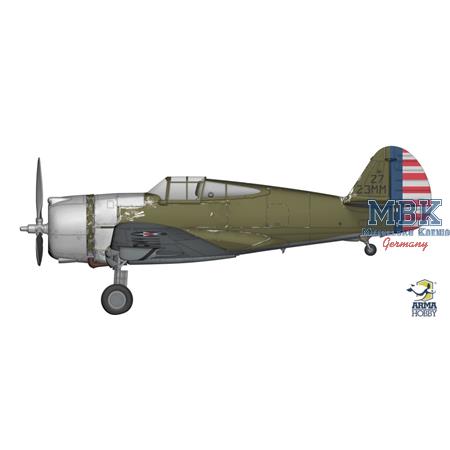


Curtiss P-36C
Item Number:
ARMA70082
ARMA70082
Manufacturer
ARMA HOBBY
ARMA HOBBY
Scale:
1:72
1:72
Please login here to see Prices.
Out of Stock
Article is coming
The Curtiss P-36 Hawk was the first modern American fighter aircraft to see frontline service with the USAAC. Developed in response to the rapid changes in global military aviation during the second half of the 1930s, it marked a significant break with earlier biplane designs.
Retractable landing gear, an enclosed cockpit, and an all-metal airframe formed the basis for subsequent generations of American fighters.
The P-36C variant represented the final stage of development and was produced in very limited numbers. The last thirty P-36As were completed to this new standard, equipped with the 1,200 hp Pratt & Whitney R-1830-17 engine and enhanced armament.
Aircraft of this version were fitted with additional .30 caliber machine guns in the wings.
Under the wings were distinctive, externally visible hoppers for spent cartridges—a feature that became one of the P-36C's most striking characteristics.
Due to the small production numbers, the P-36Cs did not form their own unified units, but were distributed among squadrons that primarily flew older P-36A variants.
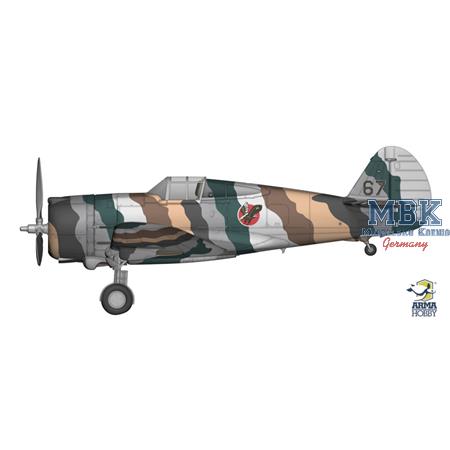
The largest concentration was found in the 27th Pursuit Squadron, which established itself as a natural base for operational trials and the testing of new solutions, including experimental camouflage schemes.
The aircraft of the 27th Pursuit Squadron played a key role in the camouflage trials conducted in 1939.
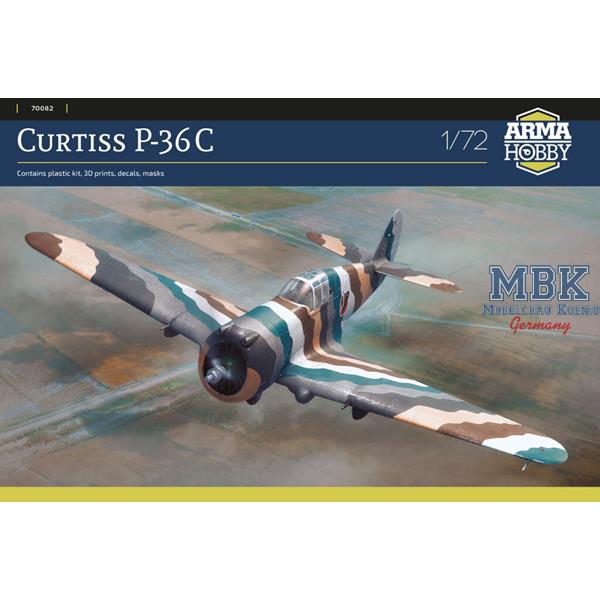
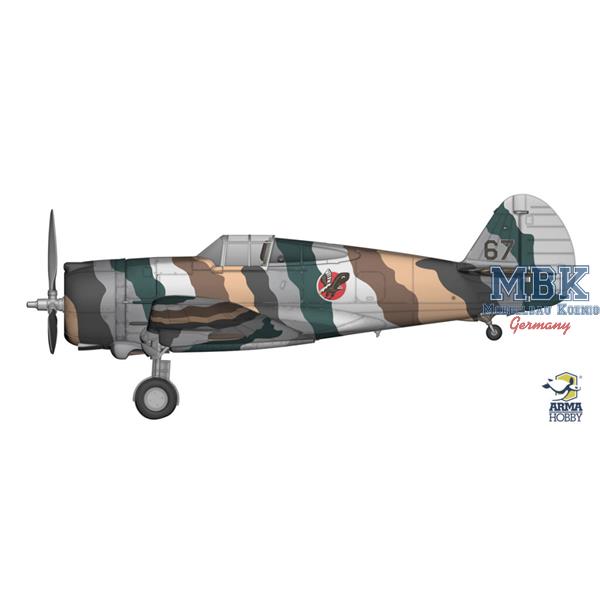
The culmination of these efforts was the P-36C's participation in the National Air Races in Cleveland, Ohio, in September 1939. The aircraft exhibited there attracted attention with their striking, high-contrast, and often makeshift paint schemes, applied without uniform guidelines and serving as a testing ground for future standards.
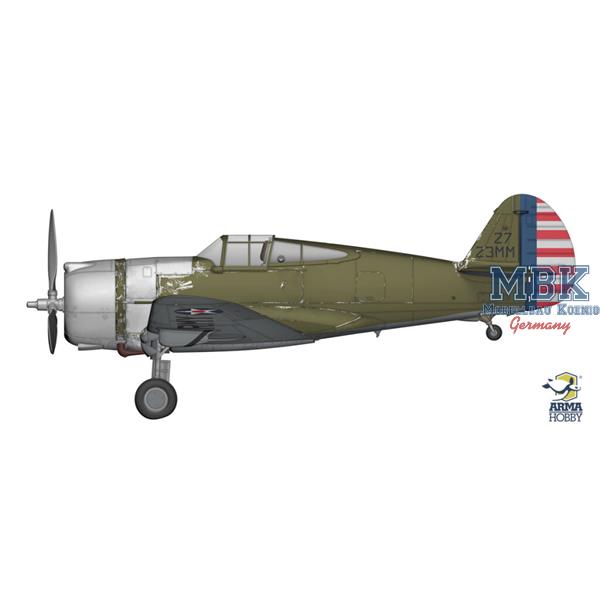
Another unit that operated the P-36C was the 23rd Composite Group, based at Eglin Field in Florida.
The Air Corps Proving Ground was located there, where fighter and bomber tactics were refined and extensive research was conducted. This same facility later trained B-25B crews for the famous attack on Tokyo in April 1942, with P-36 aircraft also participating in the training of bombardiers.
Thus, the Curtiss P-36C went down in history as one of the most ambiguous and visually diverse Hawk variants.
The short production run, distribution across different units, and intensive testing meant that almost every aircraft differed in equipment details and external appearance.
This makes this version particularly interesting for researchers and model builders interested in the transitional period in the development of American fighter aircraft.
Plastic model kit
unbuilt / unpainted
Paint and glue not included
Retractable landing gear, an enclosed cockpit, and an all-metal airframe formed the basis for subsequent generations of American fighters.
The P-36C variant represented the final stage of development and was produced in very limited numbers. The last thirty P-36As were completed to this new standard, equipped with the 1,200 hp Pratt & Whitney R-1830-17 engine and enhanced armament.
Aircraft of this version were fitted with additional .30 caliber machine guns in the wings.
Under the wings were distinctive, externally visible hoppers for spent cartridges—a feature that became one of the P-36C's most striking characteristics.
Due to the small production numbers, the P-36Cs did not form their own unified units, but were distributed among squadrons that primarily flew older P-36A variants.
The largest concentration was found in the 27th Pursuit Squadron, which established itself as a natural base for operational trials and the testing of new solutions, including experimental camouflage schemes.
The aircraft of the 27th Pursuit Squadron played a key role in the camouflage trials conducted in 1939.
The culmination of these efforts was the P-36C's participation in the National Air Races in Cleveland, Ohio, in September 1939. The aircraft exhibited there attracted attention with their striking, high-contrast, and often makeshift paint schemes, applied without uniform guidelines and serving as a testing ground for future standards.
Another unit that operated the P-36C was the 23rd Composite Group, based at Eglin Field in Florida.
The Air Corps Proving Ground was located there, where fighter and bomber tactics were refined and extensive research was conducted. This same facility later trained B-25B crews for the famous attack on Tokyo in April 1942, with P-36 aircraft also participating in the training of bombardiers.
Thus, the Curtiss P-36C went down in history as one of the most ambiguous and visually diverse Hawk variants.
The short production run, distribution across different units, and intensive testing meant that almost every aircraft differed in equipment details and external appearance.
This makes this version particularly interesting for researchers and model builders interested in the transitional period in the development of American fighter aircraft.
Plastic model kit
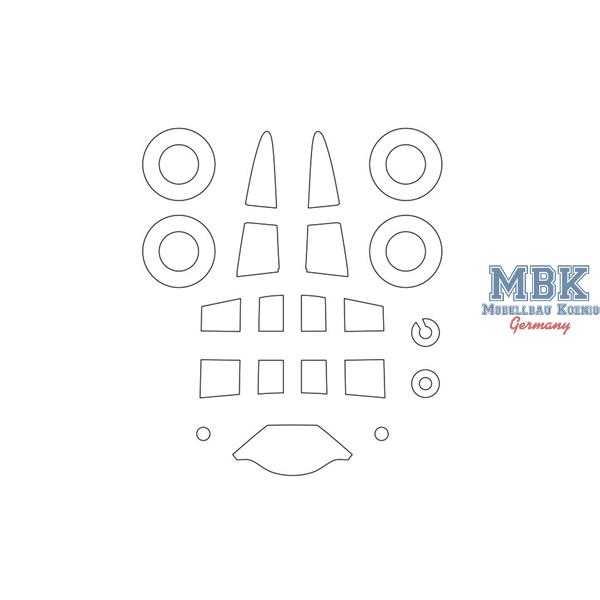
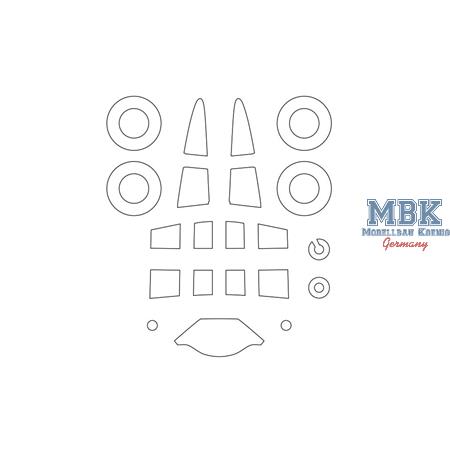
- Paint masks
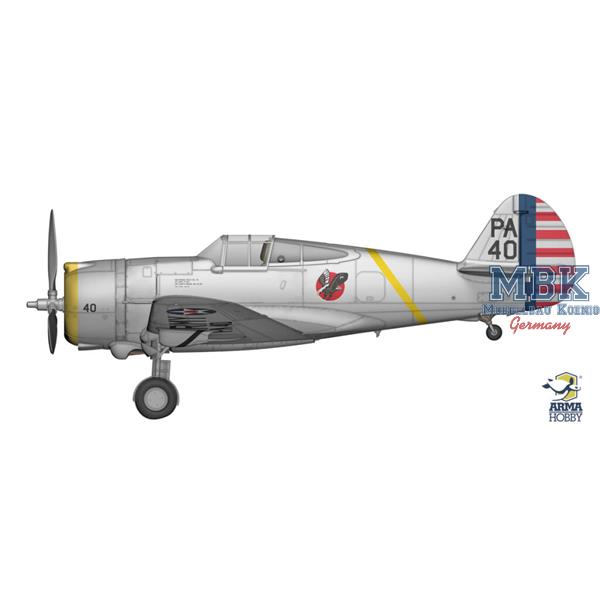
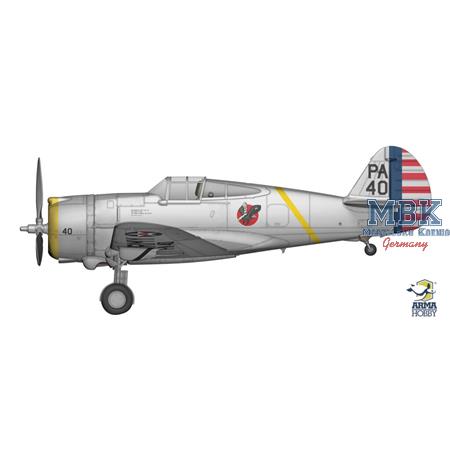
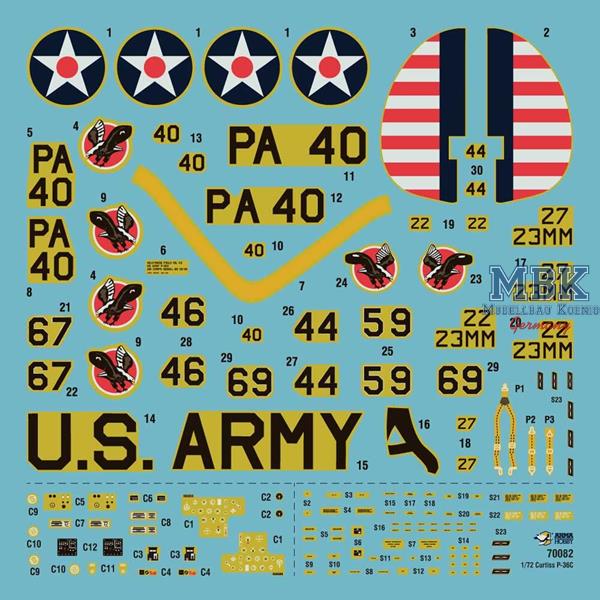
- Decals with 3 marking options
- Free 3D file for self-printing - QR code and link in the assembly instructions
unbuilt / unpainted
Paint and glue not included
Customer Reviews 0
Schreiben Sie jetzt Ihre persönliche Erfahrung mit diesem Artikel und helfen Sie anderen bei deren Kaufentscheidung