



WWII British Petroleum Cans&Jerry Cans (Combo Set)
Item Number:
35GM0161
35GM0161
Manufacturer
Gecko Models
Gecko Models
Scale:
1:35
1:35
Please login here to see Prices.
Appears soon
We expect to arrive at early / middle of October 2026
Expected to appear early / middle of October 2026
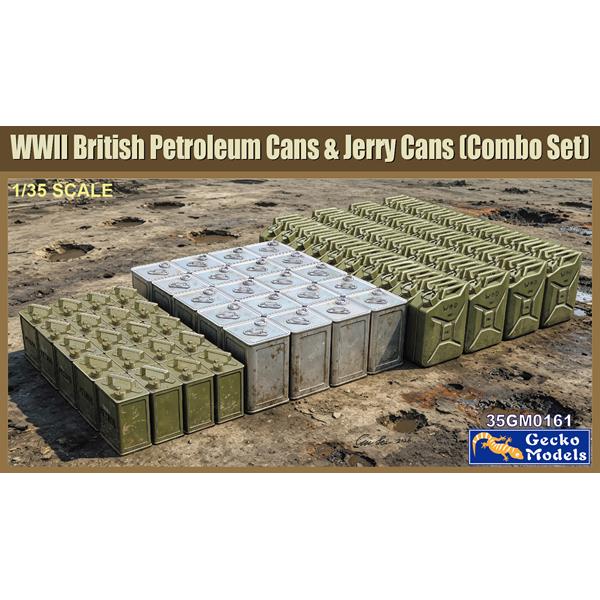
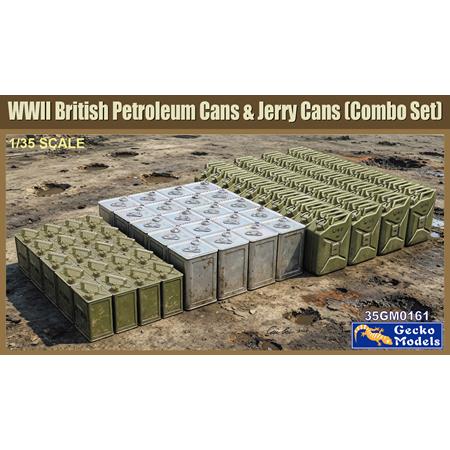
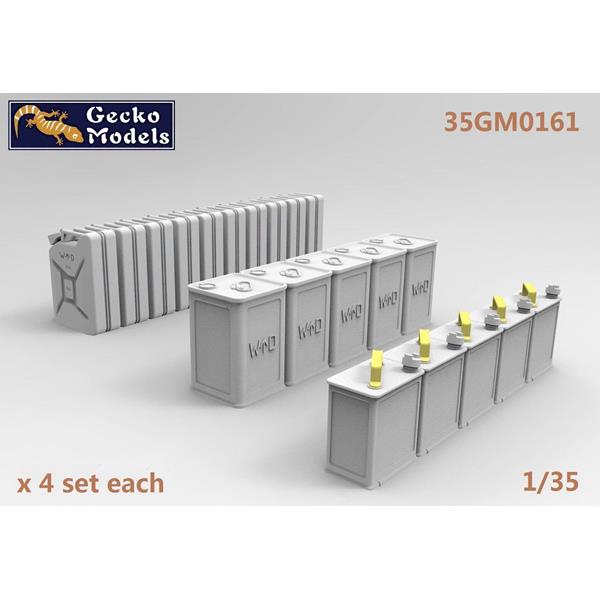
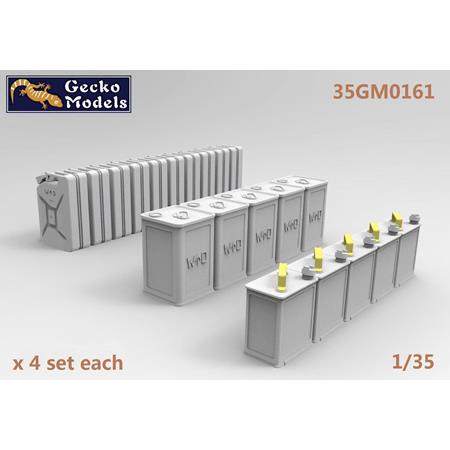
Plastic model kit featuring British 2- and 4-gallon fuel containers ("flimsies") and 5-gallon fuel cans in bundled sets
However, "flimsies" were technically problematic: their thin-walled construction made them prone to leaks, damage, and evaporative loss. Poor workmanship or inadequate sealing could also lead to leaks, resulting in both fuel loss and safety hazards. Historically, these flaws caused a significant portion of transported fuel to be lost, complicating supply efforts - especially for British troops in remote operational areas.
In contrast, more robust designs - such as the German *Wehrmacht-Einheitskanister* (standard fuel can) - proved far more reliable. This experience later influenced the development of standardized, sturdier fuel cans that were adopted internationally after the war.
The British Type 1942 5-gallon "Jerry Can" was a standardized British fuel container from World War II with a capacity of approximately 5 Imperial gallons (≈ 22.7 liters). It was developed in response to the superiority of the German *Wehrmacht-Einheitskanister*; the Allies adopted and further refined that design for their own use. The British 1942 model was made of pressed sheet steel - manufactured in two halves and then welded together - which provided high stability at a comparatively low weight. Characteristic features included three parallel carrying handles, allowing for easy handling by one or more people, and an internal cross-shaped reinforcement profile that added strength and reduced the sloshing of the contents.
Technically, the canister featured a tight-sealing clamp closure with a lever mechanism and an integrated gasket, preventing leaks even under harsh operating conditions. It was also designed to be stackable, allowing for space-efficient storage during transport. Its robust construction made it resistant to impacts and temperature fluctuations - qualities of particular importance in operational theaters such as North Africa.
Historically, the canister entered mass production in 1942, replacing older, less reliable containers. It played a pivotal role in military logistics by enabling the safe and efficient transport of fuel and other liquids. Thanks to its practicality, the design gained international acceptance and remains the basis for modern fuel canisters to this day.
- 1:35 scale
- 4 sets of 5 cans per type
- Unassembled, unpainted
- Paint and glue not included
However, "flimsies" were technically problematic: their thin-walled construction made them prone to leaks, damage, and evaporative loss. Poor workmanship or inadequate sealing could also lead to leaks, resulting in both fuel loss and safety hazards. Historically, these flaws caused a significant portion of transported fuel to be lost, complicating supply efforts - especially for British troops in remote operational areas.
In contrast, more robust designs - such as the German *Wehrmacht-Einheitskanister* (standard fuel can) - proved far more reliable. This experience later influenced the development of standardized, sturdier fuel cans that were adopted internationally after the war.
The British Type 1942 5-gallon "Jerry Can" was a standardized British fuel container from World War II with a capacity of approximately 5 Imperial gallons (≈ 22.7 liters). It was developed in response to the superiority of the German *Wehrmacht-Einheitskanister*; the Allies adopted and further refined that design for their own use. The British 1942 model was made of pressed sheet steel - manufactured in two halves and then welded together - which provided high stability at a comparatively low weight. Characteristic features included three parallel carrying handles, allowing for easy handling by one or more people, and an internal cross-shaped reinforcement profile that added strength and reduced the sloshing of the contents.
Technically, the canister featured a tight-sealing clamp closure with a lever mechanism and an integrated gasket, preventing leaks even under harsh operating conditions. It was also designed to be stackable, allowing for space-efficient storage during transport. Its robust construction made it resistant to impacts and temperature fluctuations - qualities of particular importance in operational theaters such as North Africa.
Historically, the canister entered mass production in 1942, replacing older, less reliable containers. It played a pivotal role in military logistics by enabling the safe and efficient transport of fuel and other liquids. Thanks to its practicality, the design gained international acceptance and remains the basis for modern fuel canisters to this day.
Customer Reviews 0
Schreiben Sie jetzt Ihre persönliche Erfahrung mit diesem Artikel und helfen Sie anderen bei deren Kaufentscheidung