

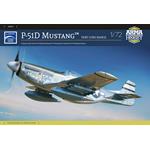
North-American P-51 D Mustang Very Long Range
Item Number:
ARMA70073
ARMA70073
Manufacturer
ARMA HOBBY
ARMA HOBBY
Scale:
1:72
1:72
Please login here to see Prices.
More than 5 Pieces available
Shipping 1 - 4 days
The North American Aviation P-51 Mustang is a single-seat American long-range fighter and fighter-bomber used in World War II and the Korean War, among other wars.
The P-51D Mustang was the most important and widely used version.
The predecessor models, the P-51B and C, which appeared over Europe in late 1943, were the first to offer comprehensive escort to Berlin and back for American bombers, thanks to a range of over 2,600 km.
They paved the way to victory, but it was the improved Model D that became the real scourge of the Luftwaffe.
In January 1944, the new commander of the 8th U.S. Air Force, General James H. Doolittle, issued a groundbreaking order: escort fighters were to attack the Luftwaffe wherever they encountered it—in the air or on the ground.
Freed from the rigid obligation to stay close to the bombers, the Mustangs could seize the initiative, hunting down German fighters before they approached, and attacking airfields, trains, and convoys.
The success of this strategy was evident during "Big Week" in February 1944, when the Luftwaffe suffered heavy losses.
The P-51D retained the impressive range of its predecessors but was significantly improved.
Its "bubble canopy" offered pilots excellent visibility, and its six .50-caliber Browning machine guns provided tremendous firepower.
Beginning in the spring of 1944, Mustangs—initially the B/C and then, primarily, the D—played a crucial role in dismantling German air power.
They gave the Allies complete air superiority, which ensured the success of the Normandy invasion and the ultimate defeat of the Third Reich.
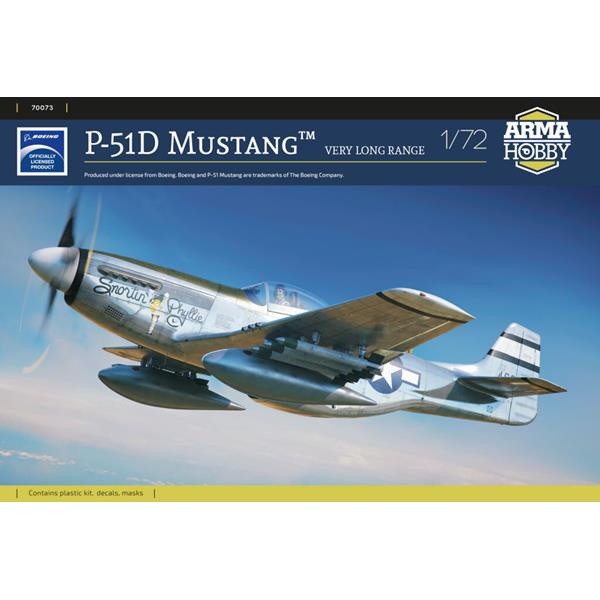
P-51D Mustang VLR was a late-war version adapted for Very Long Range missions. Aircraft of this type operated from Iwo Jima, escorting Boeing B-29 Superfortress bombers over Japan and carrying out long-range strike missions.
Plastic model kit
unbuilt / unpainted
Paint and glue not included
The P-51D Mustang was the most important and widely used version.
The predecessor models, the P-51B and C, which appeared over Europe in late 1943, were the first to offer comprehensive escort to Berlin and back for American bombers, thanks to a range of over 2,600 km.
They paved the way to victory, but it was the improved Model D that became the real scourge of the Luftwaffe.
In January 1944, the new commander of the 8th U.S. Air Force, General James H. Doolittle, issued a groundbreaking order: escort fighters were to attack the Luftwaffe wherever they encountered it—in the air or on the ground.
Freed from the rigid obligation to stay close to the bombers, the Mustangs could seize the initiative, hunting down German fighters before they approached, and attacking airfields, trains, and convoys.
The success of this strategy was evident during "Big Week" in February 1944, when the Luftwaffe suffered heavy losses.
The P-51D retained the impressive range of its predecessors but was significantly improved.
Its "bubble canopy" offered pilots excellent visibility, and its six .50-caliber Browning machine guns provided tremendous firepower.
Beginning in the spring of 1944, Mustangs—initially the B/C and then, primarily, the D—played a crucial role in dismantling German air power.
They gave the Allies complete air superiority, which ensured the success of the Normandy invasion and the ultimate defeat of the Third Reich.
P-51D Mustang VLR was a late-war version adapted for Very Long Range missions. Aircraft of this type operated from Iwo Jima, escorting Boeing B-29 Superfortress bombers over Japan and carrying out long-range strike missions.
Plastic model kit
- with paint masks
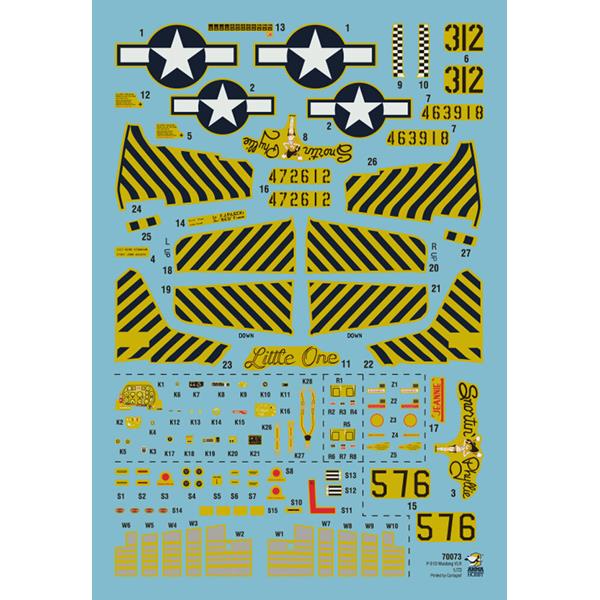
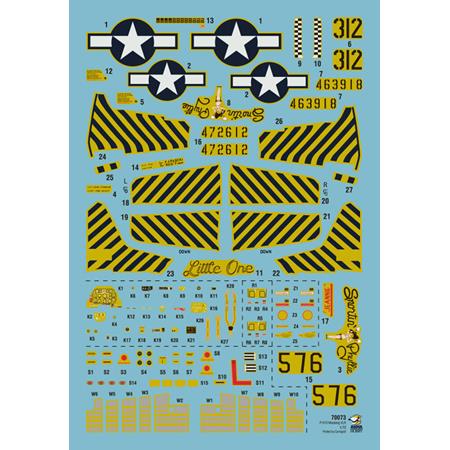
- Two decal options
- Link to free download of the 3D accessory file
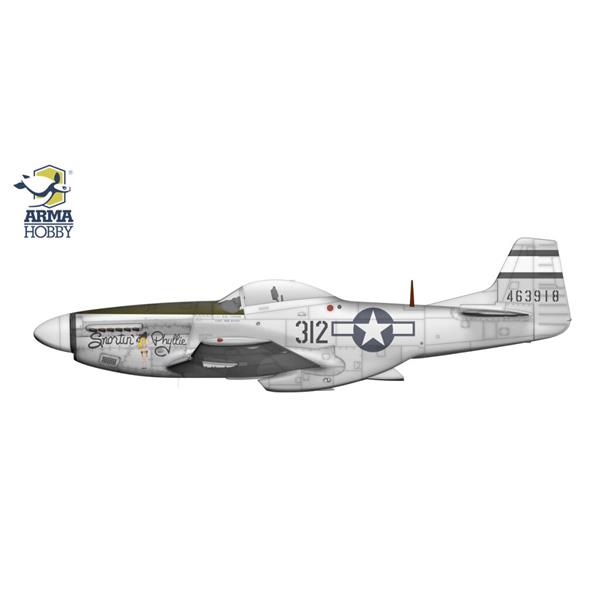
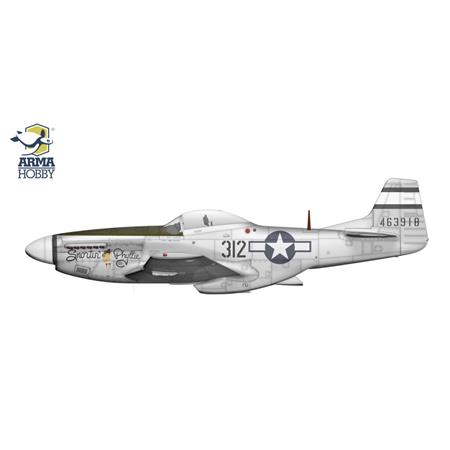
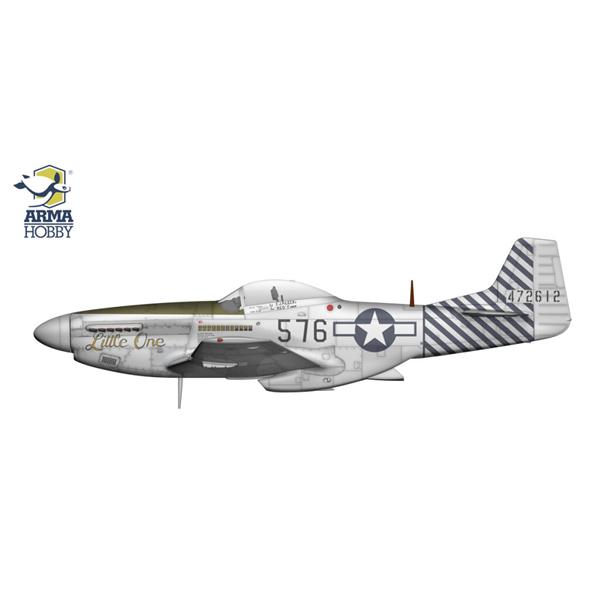
- P-51D-20-NA Mustang “Snortin’ Phyllie”
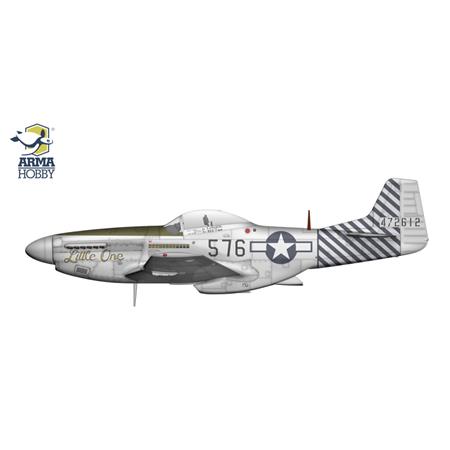
1st Lt. Herb Straughn, 531st Fighter Squadron, 21st Fighter Group, Iwo Jima, spring–summer 1945. - P-51D-25-NA Mustang “Little One”
1st Lt. Francis J. Pilecki, 458th Fighter Squadron, 506th Fighter Group, Iwo Jima, spring 1945. Tail stripe decals have been specially shaped to match the curved fin surface, providing a more realistic result than the flat tail bands often seen in other kits.
unbuilt / unpainted
Paint and glue not included
Customer Reviews 0
Schreiben Sie jetzt Ihre persönliche Erfahrung mit diesem Artikel und helfen Sie anderen bei deren Kaufentscheidung