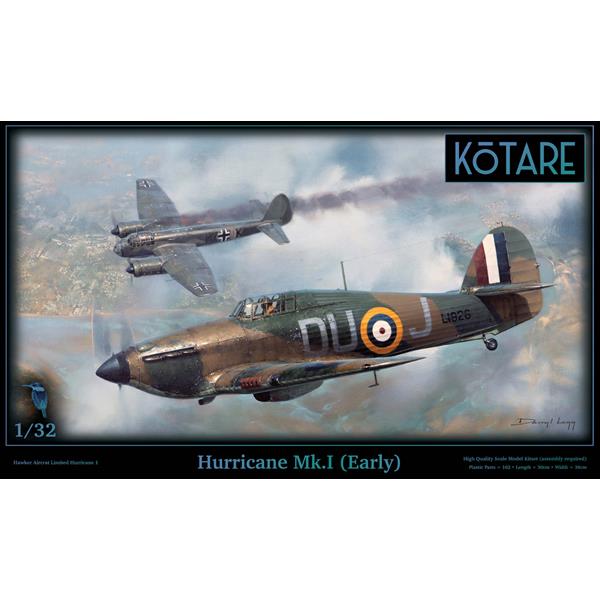
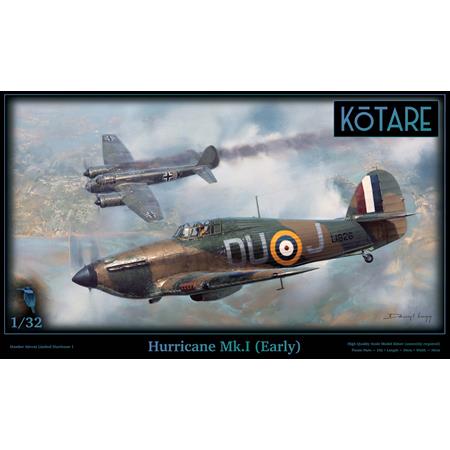


Hawker Hurricane Mk.I (Early)
Item Number:
KTR32015
KTR32015
Manufacturer
KOTARE Models
KOTARE Models
Scale:
1:32
1:32
Please login here to see Prices.
Appears soon
We expect to arrive at early / middle of November 2026
Expected to appear early / middle of November 2026
The legendary Hawker Hurricane formed the backbone of RAF Fighter Command during the Battle of Britain.
The Hurricane was a development of the successful "Fury" biplane fighter of the early 1930s, which was powered by a 525 hp Rolls-Royce Kestrel engine.
Designed starting in 1933, the monoplane adopted key design features from the Fury: a fuselage with a steel-tube framework and detachable metal cowling at the front, while the rear section was fabric-covered and supported by wooden stringers. The monoplane's thick wing featured a center section with a metal framework and semi-stressed metal skinning, whereas the outer wing sections and tail unit were fabric-covered. Powered by a 990 hp Rolls-Royce Merlin "C" engine, the Hurricane prototype made its maiden flight on November 6, 1935. An initial production order for 600 aircraft was placed in June 1936; despite delays caused by redesigning the aircraft for the new 1,030 hp Rolls-Royce Merlin II engine, the first production model was completed in October 1937. Although production started slowly, the Hurricane's conventional construction allowed for a rapid increase in output, enabling it to outnumber the far more complex Spitfire by approximately two to one.
The first production Hurricane Mk.I aircraft were initially powered by a 1,030 hp Rolls-Royce Merlin II engine, paired with a fixed-pitch two-blade propeller and kidney-shaped ejector exhaust stacks. The fuselage featured flush spot-welded metal skinning in the engine and side sections, a removable fabric-covered panel on each side, ring-and-bead sights, an external Venturi tube for generating suction, two chutes for dropping parachute flares, and a retractable tailwheel. The cockpit was protected by an unarmored windshield with a curved lower frame and a sliding canopy that lacked a removable side section. The wings were equipped with eight Browning .303 machine guns and a dual-opening Pitot tube beneath the left wing, while the retractable landing gear featured five-spoke wheels and fairings (doors) that included small additional covers for the oleo strut wells. Numerous modifications were tested and introduced during the production run, including an engine cowling with simplified blisters for internal components (from approx. March 1938), an improved lever-operated emergency exit hatch in the cockpit, a redesigned stressed-skin metal wing center section (from approx. May 1938), and triple exhaust stacks (from approx. July 1938). Early examples of the Hurricane Mk.I featured further modifications, including a taller rudder and a ventral fin with a non-retractable tailwheel (from approx. August 1938); riveted engine and fuselage side panels (from approx. October 1938); a two-piece nose cowling to accommodate the vacuum pump and the Merlin III engine's propeller pitch-change mechanism (from approx. February 1939); the 1,030 hp Rolls-Royce Merlin III engine (eliminating the need for a venturi tube); revised undercarriage fairings with six openings (from approx. April 1939); a single-opening Pitot tube (from approx. June 1939); an externally mounted bulletproof windscreen; a three-bladed, two-pitch de Havilland propeller (from approx. August 1939); an armor plate behind the pilot's seat (from approx. September 1939—initially only for frontline units); simplified exhaust manifolds; and an externally mounted gun camera.
Plastic model kit
unbuilt / unpainted
Paint and glue not included
The Hurricane was a development of the successful "Fury" biplane fighter of the early 1930s, which was powered by a 525 hp Rolls-Royce Kestrel engine.
Designed starting in 1933, the monoplane adopted key design features from the Fury: a fuselage with a steel-tube framework and detachable metal cowling at the front, while the rear section was fabric-covered and supported by wooden stringers. The monoplane's thick wing featured a center section with a metal framework and semi-stressed metal skinning, whereas the outer wing sections and tail unit were fabric-covered. Powered by a 990 hp Rolls-Royce Merlin "C" engine, the Hurricane prototype made its maiden flight on November 6, 1935. An initial production order for 600 aircraft was placed in June 1936; despite delays caused by redesigning the aircraft for the new 1,030 hp Rolls-Royce Merlin II engine, the first production model was completed in October 1937. Although production started slowly, the Hurricane's conventional construction allowed for a rapid increase in output, enabling it to outnumber the far more complex Spitfire by approximately two to one.
The first production Hurricane Mk.I aircraft were initially powered by a 1,030 hp Rolls-Royce Merlin II engine, paired with a fixed-pitch two-blade propeller and kidney-shaped ejector exhaust stacks. The fuselage featured flush spot-welded metal skinning in the engine and side sections, a removable fabric-covered panel on each side, ring-and-bead sights, an external Venturi tube for generating suction, two chutes for dropping parachute flares, and a retractable tailwheel. The cockpit was protected by an unarmored windshield with a curved lower frame and a sliding canopy that lacked a removable side section. The wings were equipped with eight Browning .303 machine guns and a dual-opening Pitot tube beneath the left wing, while the retractable landing gear featured five-spoke wheels and fairings (doors) that included small additional covers for the oleo strut wells. Numerous modifications were tested and introduced during the production run, including an engine cowling with simplified blisters for internal components (from approx. March 1938), an improved lever-operated emergency exit hatch in the cockpit, a redesigned stressed-skin metal wing center section (from approx. May 1938), and triple exhaust stacks (from approx. July 1938). Early examples of the Hurricane Mk.I featured further modifications, including a taller rudder and a ventral fin with a non-retractable tailwheel (from approx. August 1938); riveted engine and fuselage side panels (from approx. October 1938); a two-piece nose cowling to accommodate the vacuum pump and the Merlin III engine's propeller pitch-change mechanism (from approx. February 1939); the 1,030 hp Rolls-Royce Merlin III engine (eliminating the need for a venturi tube); revised undercarriage fairings with six openings (from approx. April 1939); a single-opening Pitot tube (from approx. June 1939); an externally mounted bulletproof windscreen; a three-bladed, two-pitch de Havilland propeller (from approx. August 1939); an armor plate behind the pilot's seat (from approx. September 1939—initially only for frontline units); simplified exhaust manifolds; and an externally mounted gun camera.
Plastic model kit
- 163 high-quality injection-molded parts
- Fabric-covered wings (early version)
- Two-blade Vickers-Weybridge "Watts" wooden propeller
- One-piece engine cowling
- Early exhaust system with three outlets
- Unarmored and armored fuel tank fairings; ring and bead sights
- Unarmored and externally armored windshields (with open or closed canopy)
- Instrument panel and cockpit interior; starboard-side fuselage hatch
- Landing gear doors
- Five-spoke wheels with weighted tires (correct alignment)
- Openings for Browning machine guns (with and without flash hiders), Pitot tubes, and G22 gun camera. Optional parts: three-blade de Havilland propeller, two-piece engine cowling, improved exhaust system, pilot armor plate, later-style landing gear doors, reflector sights, and pilot seat (with and without harness).
- Features include full-span lower wings with a sturdy spar for correct dihedral, and realistic fabric-effect detailing (including various rib and stringer stitching patterns)
- Fully illustrated assembly instructions
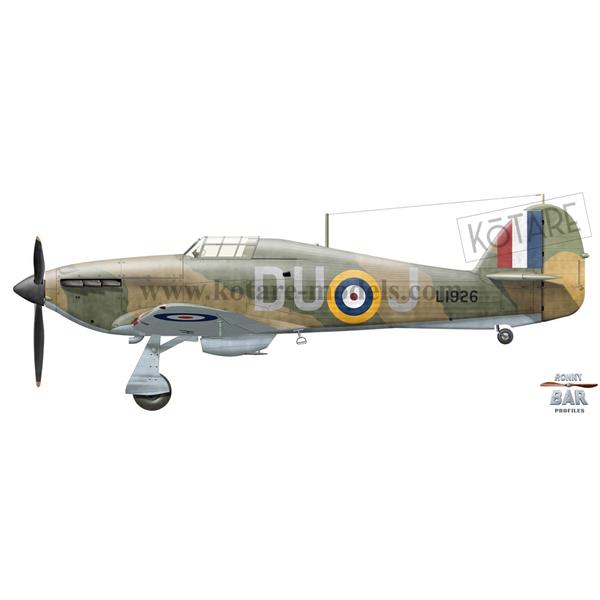
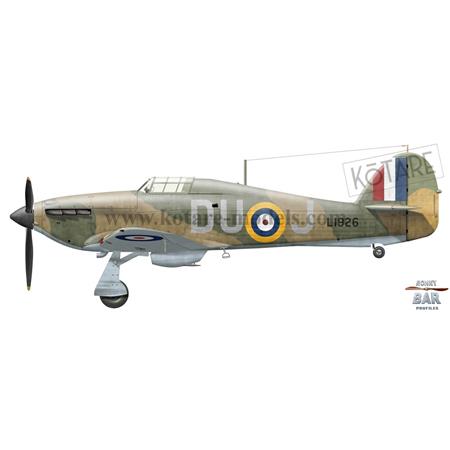
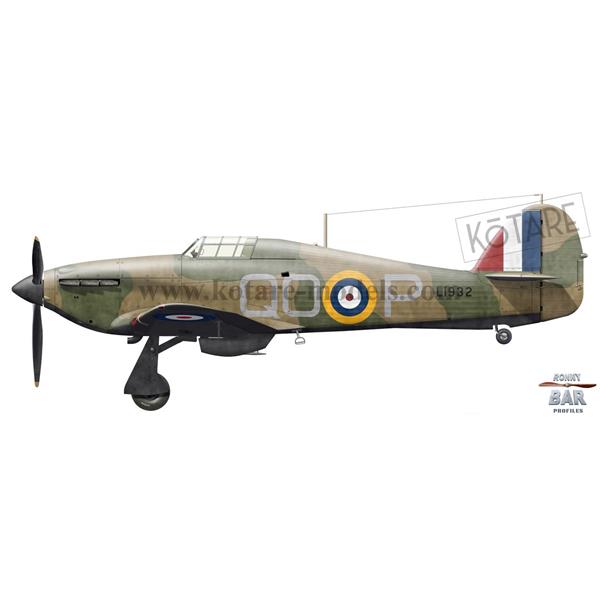
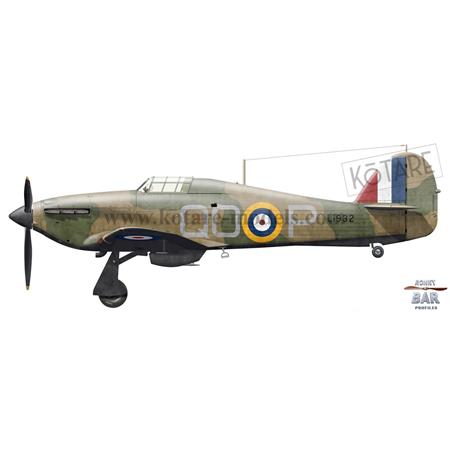
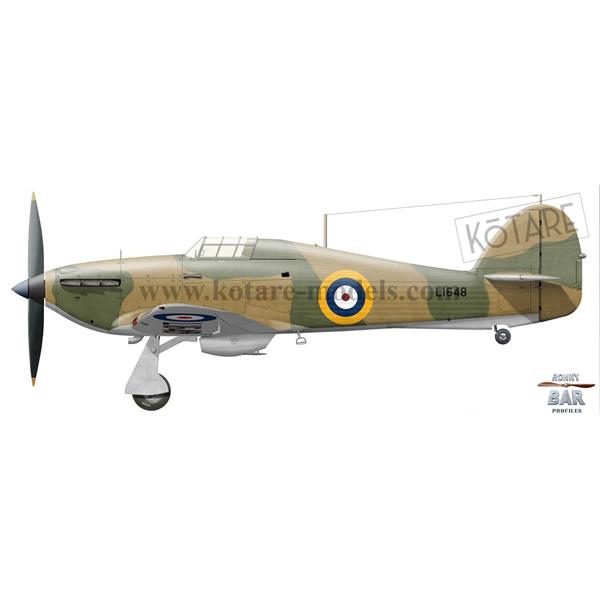
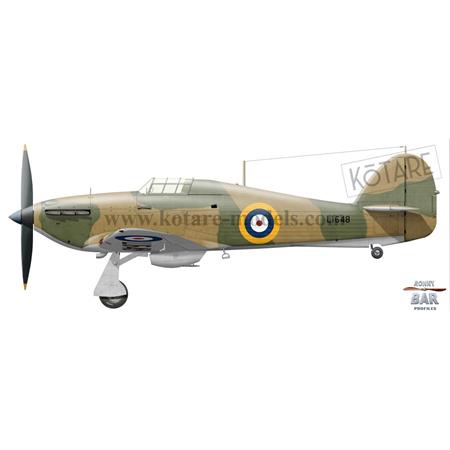
- High-quality Cartograf decals for three early-production Hurricane Mk.I aircraft
unbuilt / unpainted
Paint and glue not included
Customer Reviews 0
Schreiben Sie jetzt Ihre persönliche Erfahrung mit diesem Artikel und helfen Sie anderen bei deren Kaufentscheidung